Author: marielopez

  • Instant Play Mobile Casino Apps for Aussie Punters on the Go

    Grabbing a quick spin on the pokies used to mean dragging the laptop out, finding a decent Wi-Fi connection, and waiting for software to grind through an update. These days, a browser-based mobile casino fits in the back pocket alongside the opal card and the servo loyalty card. Smartphone casino play has shifted from novelty to norm, and the instant play format is doing the heavy lifting.

    An instant play mobile casino app works straight from your phone’s browser, no App Store download required. That distinction matters in Australia, where the big tech walled gardens take a slice of in-app purchases and where regulators keep a fairly close eye on what gets pushed through official channels. The streamlined HTML5 setup means punters can load a game, chuck in a few bucks, and chase a bonus round in the time it takes to order a flat white.

    Why Instant Play Is Winning Over Aussie Players
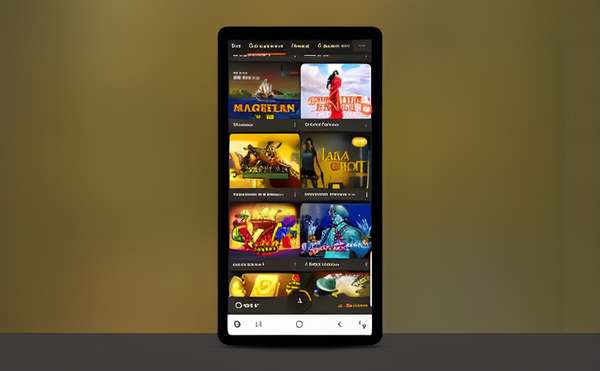
    The backbone of the modern no download casino experience is HTML5, the same tech that streams the footy highlights on your phone. It replaced the old Flash setup that used to choke on Apple devices and chew through mobile data. Today, a browser-based casino recognises your screen size, your operating system, and your connection speed, then adjusts the game on the fly.

    For a bloke catching the 6:15am from Sutherland to the CBD, or a mum waiting outside school pickup in Geelong, that flexibility is pure gold. There’s no app eating storage, no clunky permissions pop-ups, and no waiting around while a 200MB package installs over patchy 4G. Tap, load, play. Same drill whether you’re on the Telstra network in the bush or hopping onto free Wi-Fi at a Brisbane café.

    The other quiet win is cross-device sync. Start a blackjack session on the iPad during the arvo, finish it on the Samsung over smoko the next day. Bookies and casino operators have cottoned on to this, and most browser-based casino platforms now store sessions and balances in the cloud rather than on the device itself.

    Features That Separate the Leaders from the Pack

    Speed is the headline act, but a few other details decide whether a smartphone casino app actually feels good to use day-to-day. Here’s what to look for in any instant play mobile casino app worth its salt:

    • Real-money play and demo modes side by side, so you can test a new pokie before chucking real AUD at it
    • Native support for Aussie payment methods such as POLi, BPAY, and Neosurf, plus the usual Visa and Mastercard
    • A live dealer lobby that streams in HD without melting your data allowance
    • Touch-optimised layouts that don’t make the spin button the size of a postage stamp
    • Responsible gambling tools, including deposit limits and self-exclusion, built straight into the mobile lobby

    Sienna Hall, Gaming Technology Consultant at Kangaroo Point Analytics, notes that player expectations have shifted hard over the past three years. “Aussies now expect the same polish on a five-inch screen as they get on their laptop at home. Anything that lags or hides the cashier behind three menus is dead on arrival,” she says.

    Australian Market Leaders at a Glance

    The local market is crowded, but a handful of brands have built reputations around solid browser-based casino experiences. Here’s how the current crop lines up for Aussie punters:

    Brand Mobile Performance Welcome Bonus AUD Banking Live Dealer
    Joe Fortune Excellent Up to $5,000 + 30 free spins Yes Yes
    PlayAussie Very good Up to $3,000 + 100 free spins Yes Limited
    Royal Reels Mobile Good Up to $2,500 Yes No
    LuckyMate Very good Up to $4,000 + 200 free spins Yes Yes
    Red Kangaroo Casino Excellent Up to $6,000 + 50 free spins Yes Yes

    Joe Fortune stands out as one of the long-standing leaders of the Australian market, with a slick instant play mobile casino app, dedicated AUD banking, and a pokies library that reads like a roll-call of big-name providers. The brand has kept its nose clean with Australian players and consistently ranks well in user reviews from Sydney to Perth. For those keeping an eye on the broader scene, market sentiment around the sector has been notably bullish over the past 12 months.

    The Legal Landscape for Aussie Players

    Gambling in Australia sits under the Interactive Gambling Act 2001, and the Australian Communications and Media Authority (ACMA) is the cop on the beat. The Act makes it illegal for operators to offer certain online gambling products to people physically in Australia without a local licence, which is why so many platforms operate under offshore licences from Curaçao, Malta, or the Isle of Man.

    For punters, the practical takeaway is straightforward. Playing on an offshore-licensed instant play mobile casino app is generally treated as a grey area at the individual level, while the regulators focus their fire on the operators themselves. Aussie players are expected to stick with platforms that accept AUD, offer local payment methods, and carry visible responsible gambling messaging.

    The other piece of the puzzle is advertising. ACMA has been cracking down on bonus offers and misleading claims that pop up in social feeds, so legitimate brands have pulled back on the wild welcome packages and now lean on transparency. If the bonus terms are buried in fine print, treat that as a fair dinkum warning sign.

    Smart Habits for Mobile Casino Play

    A great smartphone casino app is only as good as the habits of the person using it. A few quick rules will keep the experience fun and the bank balance intact:

    • Set a hard deposit limit before you log in, and stick to it even when the bonus round is teasing you
    • Use public Wi-Fi only with a VPN, or stick to your mobile data when entering card details
    • Lock in two-factor authentication on your casino account, the same as you would on your banking app
    • Keep an eye on your screen brightness and battery levels, especially during long live dealer sessions
    • Walk away after a win rather than chasing it back, the pokies will still be there after a counter meal

    These habits are doubly important if you’re playing on a work phone or a shared family iPad. The instant play format means there’s no separate app to uninstall, so make sure you log out properly after each session.

    Where the Tech Is Heading

    The smartphone casino app of 2026 is already a far cry from the clunky mobile sites of the early 2010s. 5G rollout across Sydney, Melbourne, and the regions has killed the lag that used to plague live dealer streams. AI-driven personalisation is starting to suggest games based on your actual play style rather than generic “popular” tags. And the big live dealer studios are pushing VR-ready streams that will work in a standard browser once the headsets become cheap enough.

    Georgia Roberts, Digital Acquisition Director at Southern Capital Advisory, sees the next wave as a battle for trust. “Players are voting with their feet. The brands that win over the next few years will be the ones that combine slick tech with clear, fair terms and proper AUD support. The novelty factor is gone, it’s now about reliability,” she says.

    For anyone wondering how to test the waters without committing too much cash, https://wolf-gold-no-deposit-au.com/play is a handy starting point. The no-deposit angle lets you try a feature-rich instant play mobile casino app before pulling out the wallet, which is exactly the kind of low-risk entry point Aussie players have been asking for.

    Pick a platform that respects your dollars, supports AUD without funky conversion fees, and treats responsible gambling as a feature rather than a footnote. The next spin is always a tap away, whether you’re at the cricket, on the tram, or hiding from the in-laws in the backyard.


  • How random number generator pokie safety keeps Aussie spins honest

    Picture the local pub on a Friday knock-off. The pokies hum from the back corner while bar staff sling schooners and someone argues about the Swans’ chances for the weekend. Behind that gentle whirr, every spin is decided by a tiny piece of code doing millions of calculations per second. That’s the random number generator, and it’s the bit most punters never see but quietly trust with their hard-earned.

    The thing about random number generator pokie safety is that it isn’t really about luck or odds in the way most people think. It’s about whether the maths underneath the reels is genuinely unpredictable, properly audited, and locked away from the hands of the operator. If any of those pillars wobble, the whole edifice falls over, and fair dinkum players cop the worst of it.

    This guide pulls apart the tech, the regulators, and the operators doing the heavy lifting. Along the way, we’ll look at what’s actually being tested, who’s checking it, and what you can do as a player to make sure the digital pokies you fire up in your loungeroom are behaving themselves.

    The maths behind the reels

    Every modern pokie, whether it’s humming away in the Carlton RSL or loading on a tablet in Bondi, runs on a pseudo-random number generator. The output is a long string of numbers that nobody, not the operator, not the player, not the bartender with the worst poker face in the venue, can predict. That string is then mapped onto the symbols on the reels, the bonus triggers, and the free spin rounds. When you hit spin, the algorithm has already chosen your outcome.

    What separates a legitimate random number generator from a dodgy one is the size of the seed and the way entropy gets fed into the system. Reputable developers use cryptographic seeds built from hardware noise, mouse movements, and system clock jitter. The result is a stream that passes statistical muster, even when auditors run billions of simulated spins through it.

    The critical phrase that gets bandied around in this space is “provably fair.” It sounds like marketing fluff, but it actually means something precise: the player can verify, after the fact, that the result of a spin was generated before the bet was placed. Cryptographic hashing makes that possible. Without it, you’re taking the operator’s word that the machine didn’t peek at your stake and quietly adjust the outcome.

    When the random number generator pokie safety chain is healthy, the maths is locked in source code at the developer level and then sealed by an independent lab. The operator receives a working copy and never gets the keys to fiddle with it. That’s the gold standard, and it’s the only one worth trusting your weekend brekkie money on.

    Who polices the pokies in Australia

    Australia’s gambling oversight is a patchwork quilt, stitched together by federal law and state regulators. The Interactive Gambling Act 2001 sets the national tone by making it illegal for operators to offer certain online casino products to Australians. At the state level, bodies like the Victorian Commission for Gambling and Liquor Regulation keep watch over the bricks-and-mortar side, and they publish technical standards that any system running on Aussie soil has to meet.

    The state regulator’s technical standards read like a fireside chat with a mathematician at one point and a lawyer at the next. They cover random number generation, game outcome integrity, and the kind of audit logs that should be filed away for years. Similar standards exist in New South Wales through Liquor & Gaming NSW, in Queensland through the Office of Liquor and Gaming Regulation, and in Western Australia through the Department of Local Government, Sport and Cultural Industries.

    For online operators, the policing often happens offshore, in jurisdictions like Curaçao, Malta, or the Isle of Man. That’s where the licence gets issued and where the auditor gets hired. The better ones publish their certificates so any player can check who’s actually checking the maths. As Evie Collins, Affiliate Partnerships Director at the Pacific Player Protection Institute, puts it: “If an operator can’t show you the lab that tested their RNG, that’s your cue to take your schooner somewhere else.”

    Independent testing labs do the heavy lifting here. Names like iTech Labs, GLI, BMM Testlabs, and eCOGRA run the suites that simulate millions of spins and crunch the numbers to make sure the random number generator behaves the way it should. A certificate from one of them isn’t a rubber stamp; it’s a forensic examination of the game’s source code and a serious piece of paper.

    How to read RNG reports without a maths degree

    Most players hit a pokie’s help menu, see the words “RTP 96.5%” and “medium volatility,” and shrug. Fair enough. The full audit report is a couple of hundred pages of spreadsheet and chi-squared tests, and it’s not built for an arvo reading session.

    The bits that matter are pretty straightforward. The RTP, or return to player, is the percentage of all wagered money the game is programmed to return over the long run. A 96% RTP means a $100 turn over, theoretically, gives back $96. The number sits close to the theoretical target across billions of spins, give or take tiny wobbles.

    Hit frequency is the other stat worth knowing. It’s how often the game lands any winning combination at all, not the size of the win. A high hit frequency with a low payout on each combo feels busy but pays out small. A low hit frequency with big potential wins feels like watching cricket: nothing happens, then everyone goes off at once.

    The real giveaway of a properly audited system is the wording in the certificate itself. Look for references to NIST statistical test suites, the Diehard tests, or the chi-squared distribution. If the lab name is on the certificate and the certificate is dated within the last couple of years, the maths is almost certainly solid. As Cooper Jackson, Board Member at Australian Gaming Futures, points out: “The auditor’s name on the certificate is worth more than a glossy banner on the homepage. Anyone can claim fairness; only an accredited lab can prove it.”

    The names worth trusting in the Aussie market

    The Australian-facing online casino scene is a wild place, full of operators you’ve never heard of and a few that have been around long enough to judge on track record. Joe Fortune is one of the names that keeps coming up in the comparison chatter, mostly because they’ve been at it since 2016 and their random number generator is audited by an independent lab, with the certificate published in the footer of their site. Hotcopper

    Operator RNG audit RTP disclosed Aussie-focused
    Joe Fortune iTech Labs Yes Yes
    Reel Rewards BMM Testlabs Yes No
    Cardinal Spin GLI Yes No
    Outback Palms iTech Labs Yes No
    Southern Cross Casino eCOGRA Yes No

    The snapshot above isn’t a ranking, more a roll-call of who is putting the audit paperwork where players can find it. Joe Fortune sits among the leaders of the Australian market because the technical paperwork is publicly available, the random number generator certificates are dated, and the games inventory is built around studios whose names appear on the lab’s list. Games like sweet bonanza and other well-known Pragmatic Play titles sit alongside the same maths providers that the major international brands rely on.

    Compliance also bleeds into the financial side. Reputable operators separate player funds from operating funds, which means your deposit doesn’t get run through payroll on a quiet Tuesday. The good ones publish the bank they’re using and the location of the segregated account. None of that is glamorous, but it’s the difference between a proper operator and a fly-by-night outfit that disappears the moment the share price starts heading south.

    Anzac Day, two-up, and why we trust the toss

    There’s a scene every Aussie knows. On Anzac Day, the local RSL fills up, someone pulls out a kip, and the pennies start flying. Two-up is the most Australian game of chance going, and the fact that it’s legally sanctioned in most states on that one day tells you something about how we treat randomness and trust in this country.

    Two-up works because the coins are visible, the toss is open, and the ring is right there in the middle of the floor. Anyone with a good eye can watch the coins spin, and the only thing that matters is what shows up when they land. The system is honest because the conditions are honest.

    The same principle runs underneath the modern pokie. We don’t see the coin or the ring, but we trust the spittoon of maths in the same way. Auditors, regulators, and lab certificates do the equivalent of standing over the kip and watching the toss. It’s a long way from a tin shed in the back blocks, but the social contract is the same: trust the system, and trust the people who check the system.

    This is where the Anzac Day two-up tradition quietly nips at a modern pokie’s elbow. The penny toss has been part of the Australian cultural ledger for over a century, and the legal carve-out on Anzac Day is a small nod to mateship and shared history. The maths inside a pokie machine is a different beast, but the underlying idea, that the game is on the level and someone is watching it, runs through both.

    Everyday habits that keep your gaming honest

    The technology does most of the heavy lifting, but players who want to keep their nose clean still have a few tricks up their sleeve. The first is to play only on licensed and audited sites. The licence number should be visible in the footer, alongside the lab that did the random number generator test. If you can’t find them, that’s a red flag the size of a Bondi tram. Plenty of Aussie investors share their experiences on HotCopper when a gaming company’s behaviour starts to look shaky, so it’s worth a quick squiz before you deposit.

    The second habit is to set a budget before you load a game. Pokies are designed to be hypnotic, and the combination of sound effects, near-misses, and bonus triggers can make an hour disappear faster than a meat pie at the footy. Punters who set a hard limit and stick to it are the ones who actually enjoy the game. Liam Williams, Commercial Director at Swan River Interactive, likes to put it this way: “Treat the spin like a shout at the pub. Sometimes you win, mostly you don’t, but you never spend more than you can comfortably cover.”

    The third habit is to keep your own records. It sounds tedious, but a quick note in your phone about deposits, withdrawals, and the games you played goes a long way. If something doesn’t add up, the operator has a record and so do you. Disputes are easier to resolve when both sides are looking at the same numbers, and the operator is far less likely to fudge the maths when they know the player can cross-reference.

    Finally, remember the tools that operators are required to offer. Deposit limits, session timers, cooling-off periods, and self-exclusion are all standard on legitimate platforms. Use them. They’re not a sign of weakness; they’re the equivalent of mateship in the digital age. The safer you play, the longer the reels stay fun, and the fewer times you’ll find yourself chucking a wobbly at the laptop on a quiet Sunday arvo.

Select your currency
GBP Pound sterling